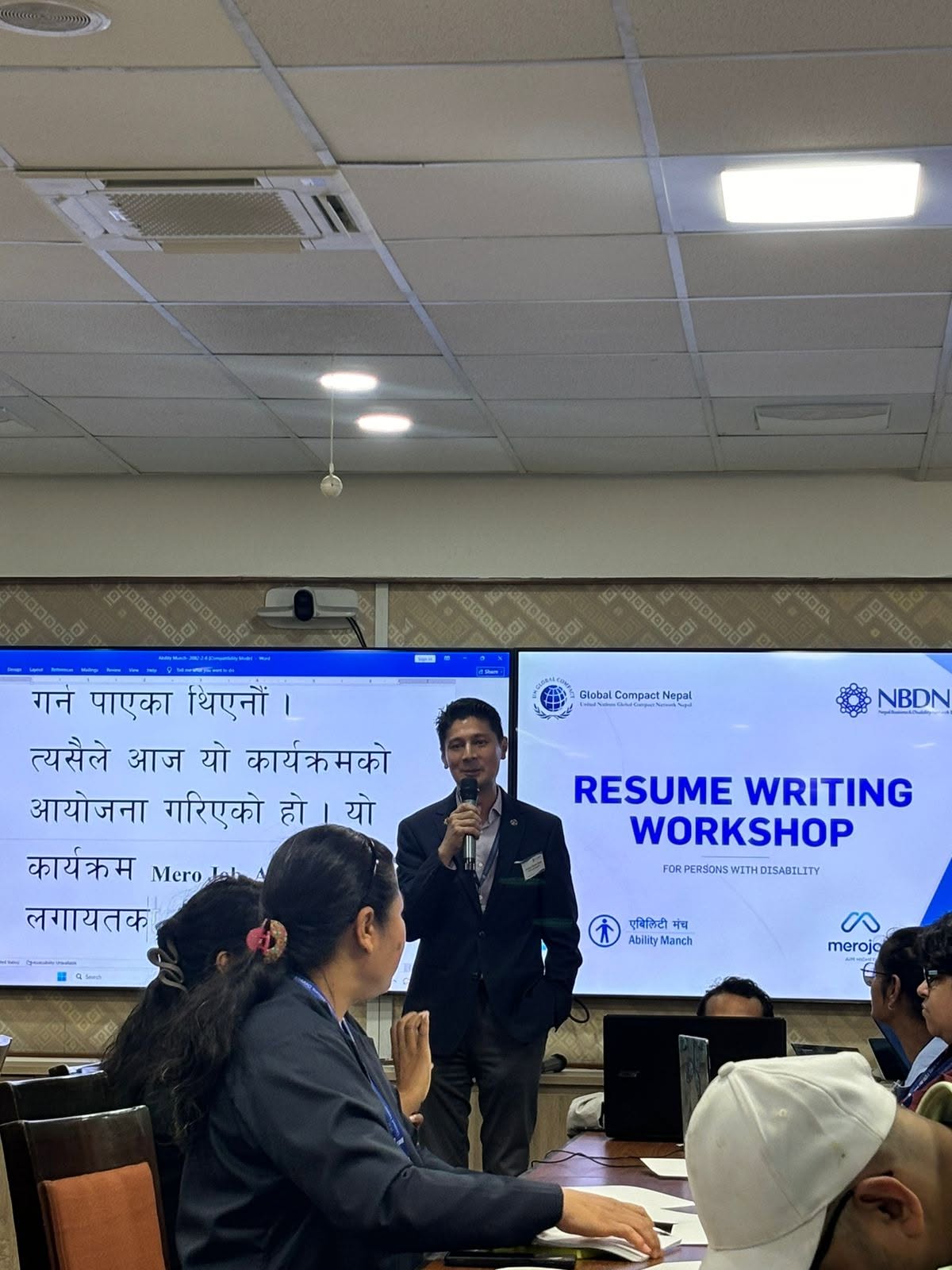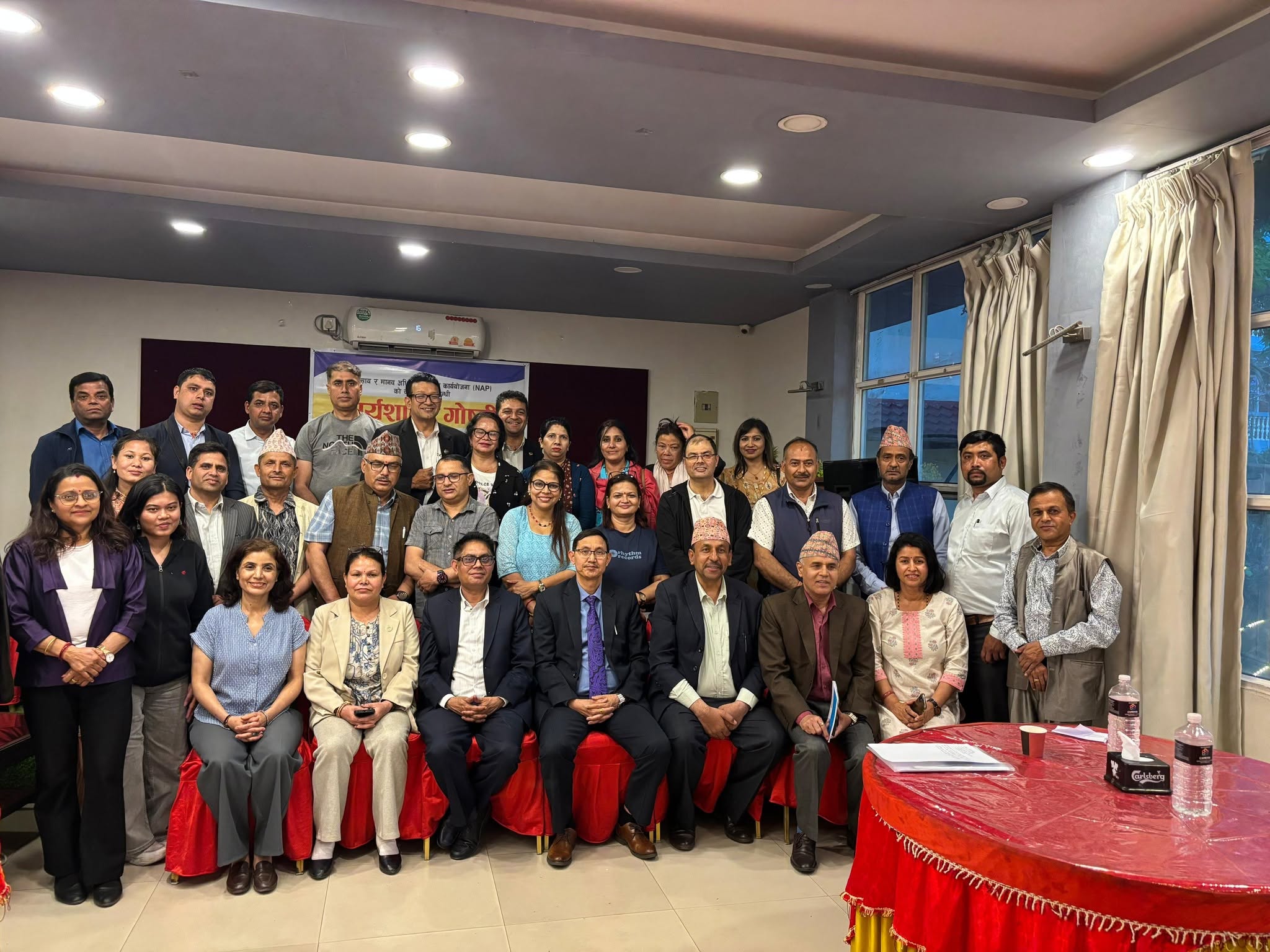

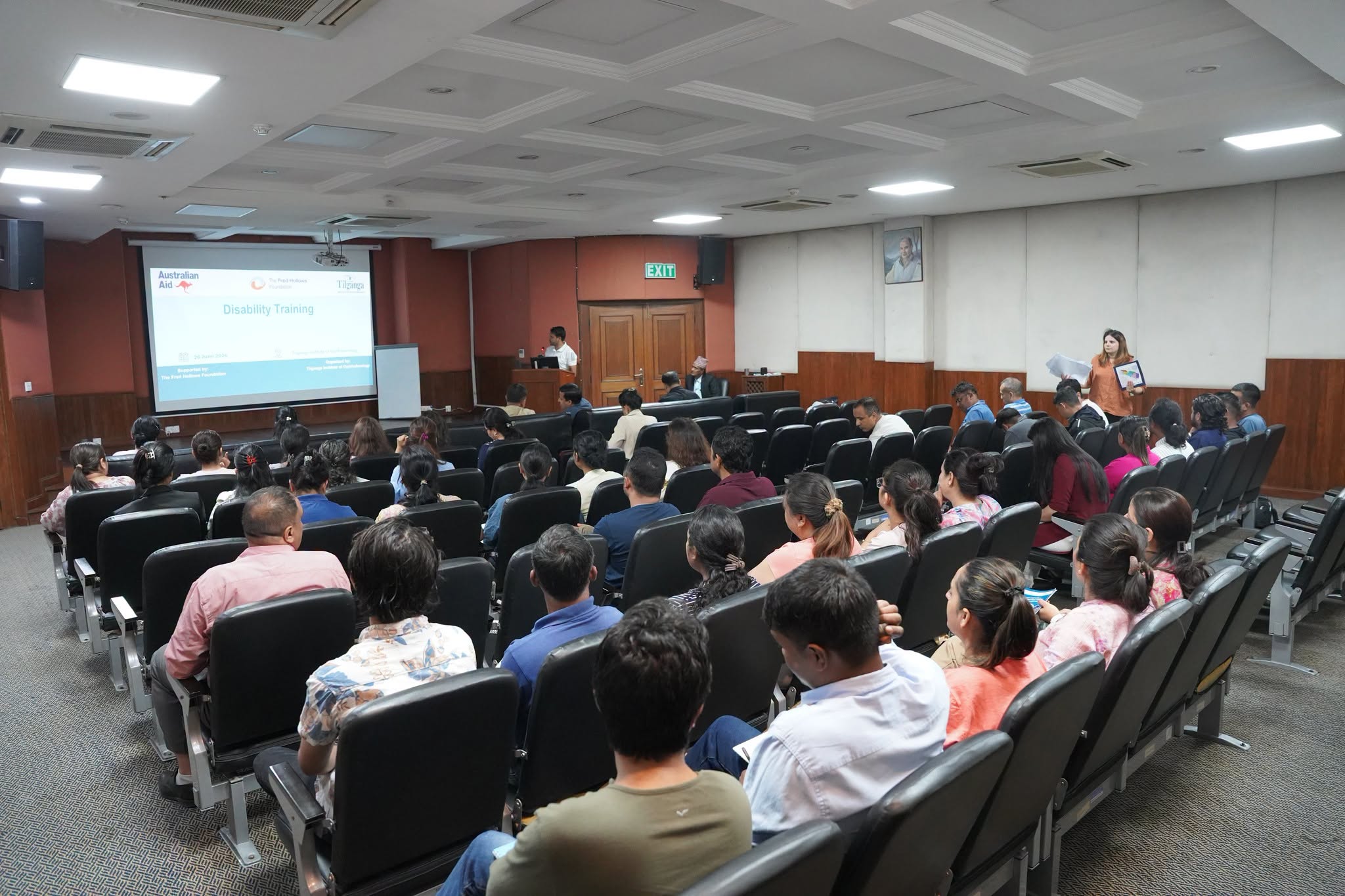
Kathmandu, Nepal – Ability Manch successfully provided a series of Disability Inclusion, Gender Equality, and Child Protection Orientation Trainings for the Nepal Eye Program – Tilganga Institute of Ophthalmology (NEP-TIO), supporting the institute’s commitment to delivering quality, accessible, inclusive, and rights-based eye health services across Nepal.
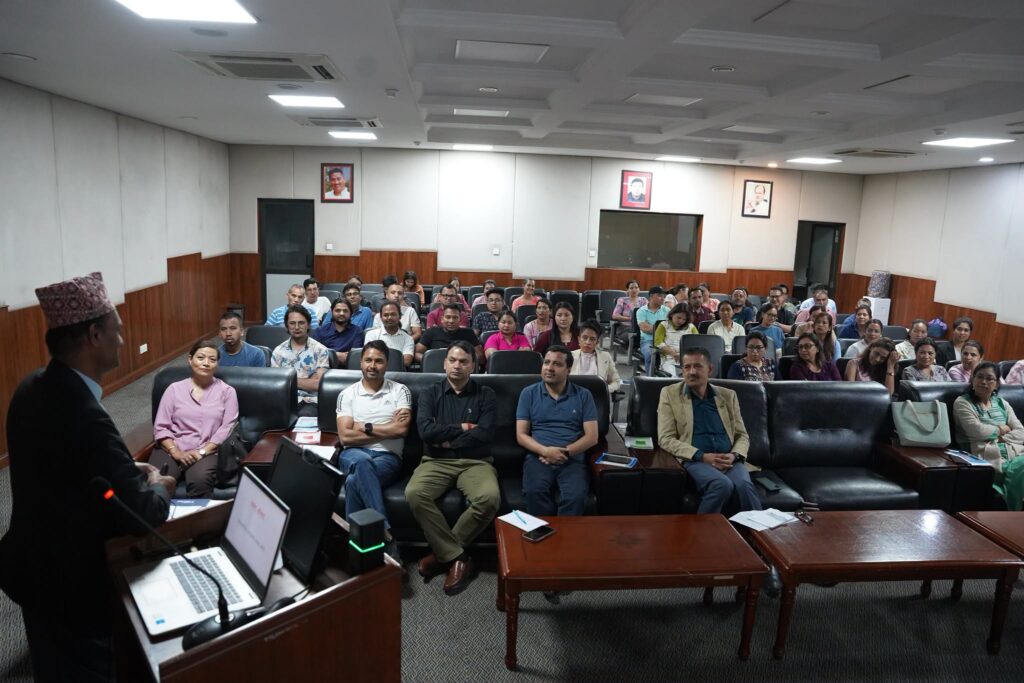
The orientation programme was organised to strengthen the capacity of NEP-TIO staff in implementing the institute’s policies on Disability Inclusion, Gender Equality, and Child Protection, ensuring that all services, workplaces, and community engagements are safe, respectful, accessible, and free from discrimination.
Through this initiative, Ability Manch facilitated orientation sessions for more than 500 staff members working across 15 Community Eye Hospitals and Eye Centres under the Nepal Eye Program – Tilganga Institute of Ophthalmology.
The training aimed to enhance participants’ understanding of the rights, needs, and inclusion of persons with disabilities while promoting gender equality and safeguarding children in both service delivery and organisational practices.
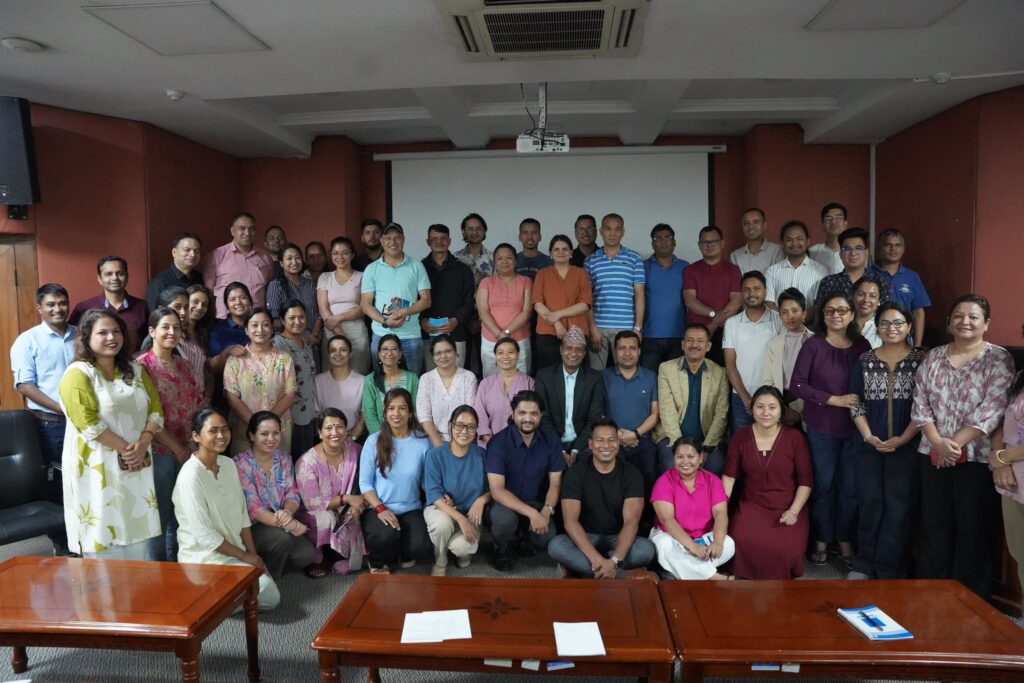
During the sessions, Ability Manch facilitated interactive discussions on:
- Disability rights and disability-inclusive service delivery
- Understanding different types of disabilities and accessibility needs
- Gender Equality, Disability, and Social Inclusion (GEDSI)
- Respectful communication and disability etiquette
- Removing physical, communication, and attitudinal barriers
- Child protection principles and safeguarding responsibilities
- Creating safe, inclusive, and non-discriminatory workplaces
- Building accessible and person-centred health services
The training encouraged participants to reflect on how disability, gender, and child protection intersect within healthcare settings and highlighted the importance of ensuring that every service user receives equitable, dignified, and respectful treatment.
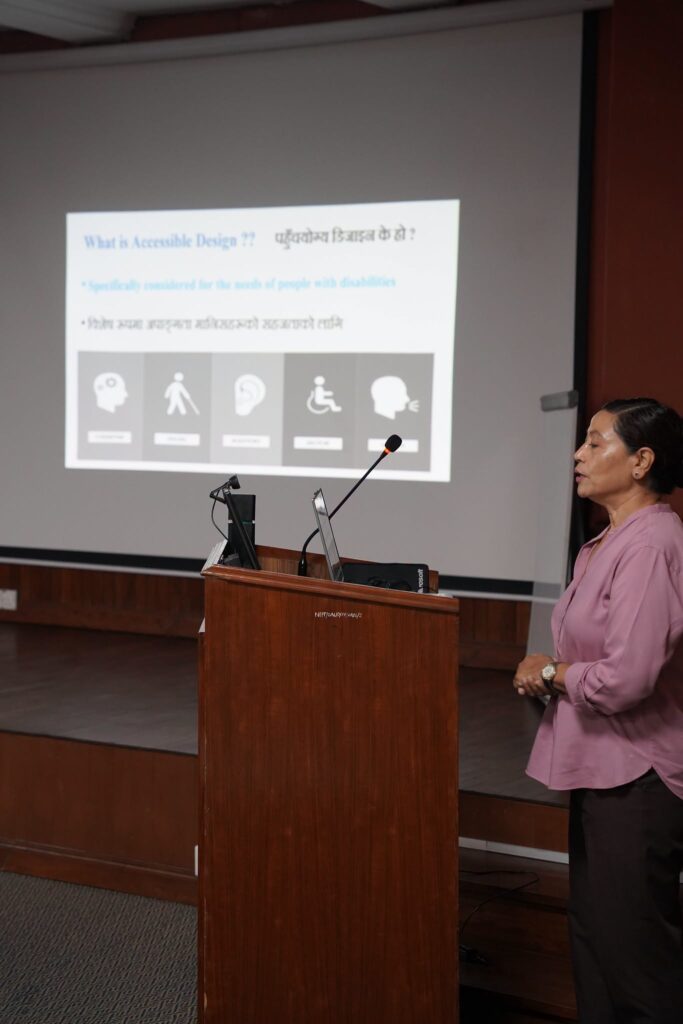
Interactive discussions and practical examples enabled staff members to identify barriers that persons with disabilities and other vulnerable groups may encounter when accessing healthcare services. Participants also explored practical strategies for improving accessibility, communication, and inclusive service provision within hospitals, eye centres, and community outreach programmes.
The orientation reinforced the principle that quality healthcare must be accessible to everyone, regardless of disability, gender, age, or background. Participants recognised that inclusive healthcare requires not only accessible infrastructure but also positive attitudes, respectful communication, and organisational systems that uphold human rights.
By strengthening staff capacity, the programme contributes to NEP-TIO’s ongoing efforts to ensure that:
- Health services are accessible and inclusive.
- Workplaces are safe, respectful, and free from discrimination.
- Persons with disabilities can access quality eye care without barriers.
- Gender equality is mainstreamed throughout institutional policies and practices.
- Child protection principles are consistently applied across all programmes and services.
The orientation programme was implemented with the support of Australian Aid (AusAID) and The Fred Hollows Foundation Australia, reflecting a shared commitment to promoting inclusive health systems and equitable access to quality eye care for all.
Ability Manch extends its sincere appreciation to the Nepal Eye Program – Tilganga Institute of Ophthalmology for its strong commitment to disability inclusion, gender equality, child protection, and accessible healthcare. The organisation remains committed to supporting institutions in strengthening inclusive policies and practices that ensure every individual can access services with dignity, respect, and equal opportunity.
The successful completion of these orientations marks another important step towards building a healthcare system where accessibility, inclusion, safeguarding, and human rights are embedded in every aspect of service delivery, ensuring that no one is left behind.