
Kathmandu | 18 May 2026
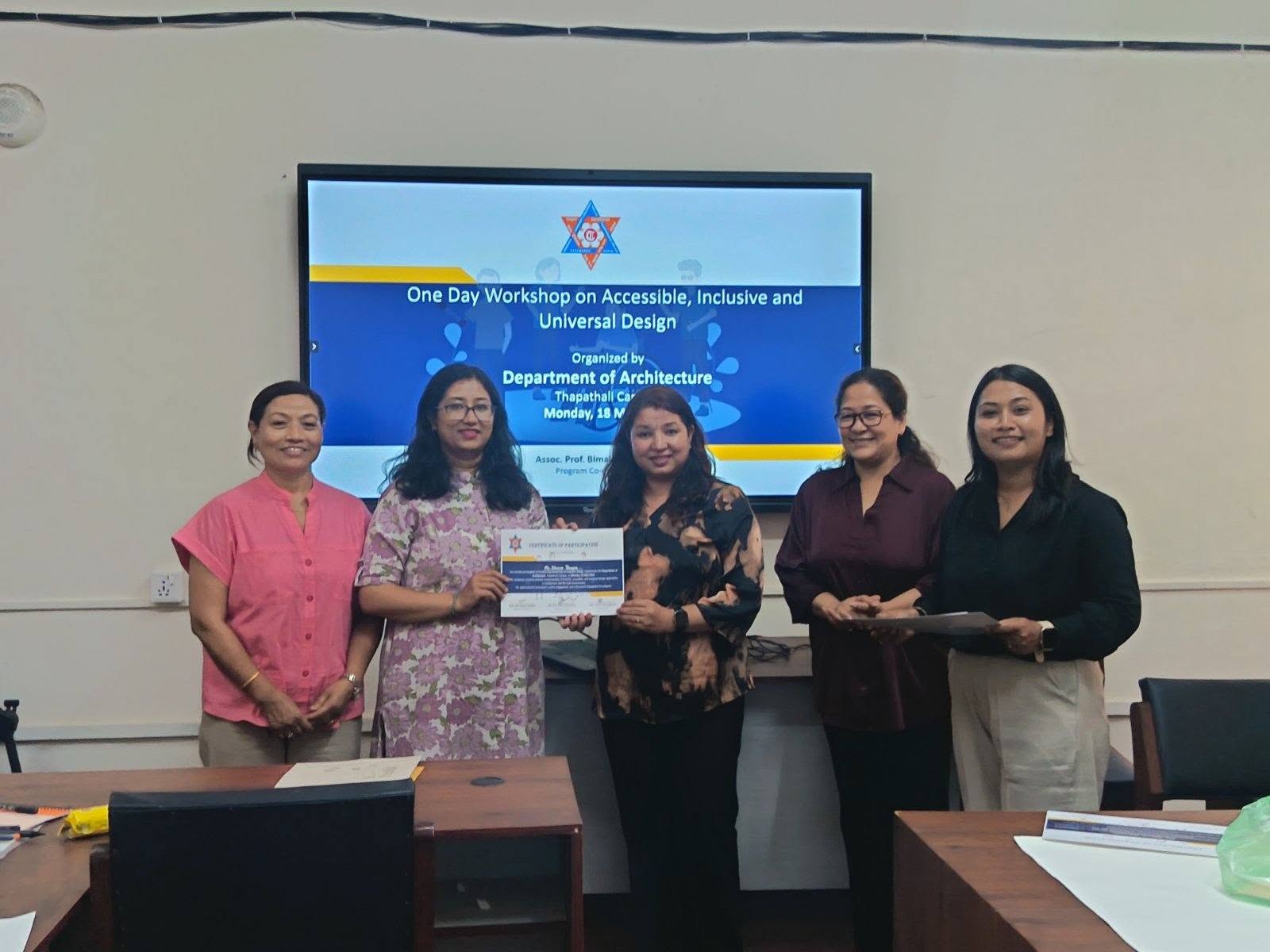
Ability Manch facilitated a one-day orientation on Accessibility, Inclusive Design, and Universal Design for the Department of Architecture, Thapathali Campus, on 18 May 2026. The workshop brought together architecture faculty members and participants to strengthen their understanding of disability inclusion and the importance of designing environments that are accessible and usable for everyone.
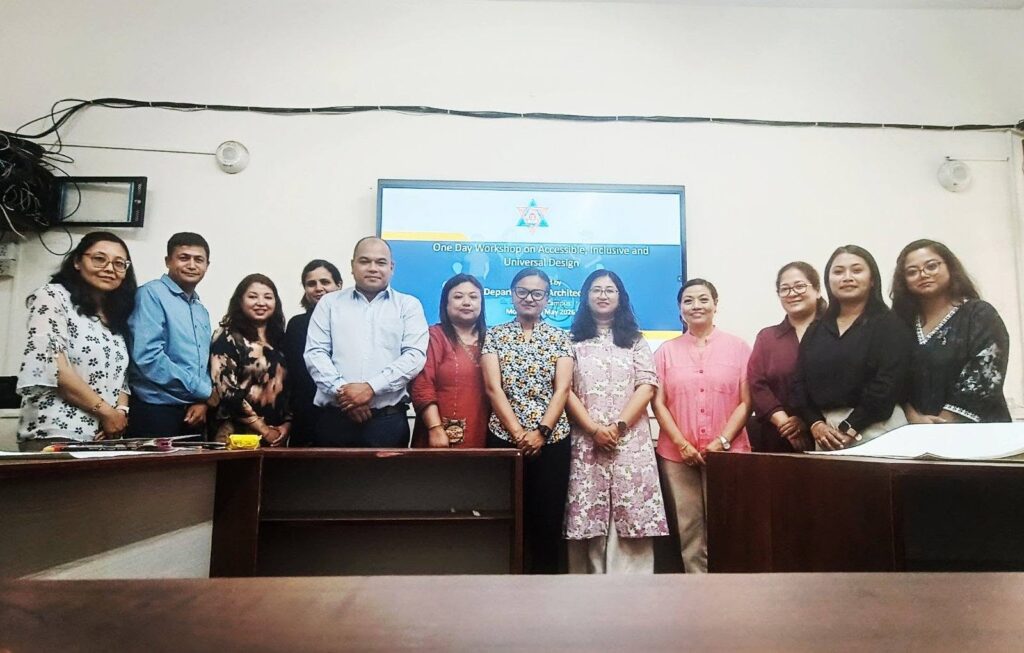
The orientation aimed to build awareness among future architects and educators on how inclusive and universal design principles can create environments that promote equal participation, dignity, and independence for all people, including persons with disabilities, older persons, children, and others with diverse access needs.
The session included a presentation by Ability Manch on understanding different types of disabilities, highlighting the diversity of disability experiences and the barriers that people face in the built environment. Participants explored the different categories of disabilities, including:
- Physical disabilities
- Visual impairments
- Hearing impairments
- Intellectual disabilities
- Psychosocial disabilities
- Autism and neurodiversity
- Multiple disabilities
The presentation emphasised that disability is not created by an individual’s impairment alone, but often by inaccessible environments, discriminatory attitudes, and systems that fail to consider diverse human needs. Through practical examples and lived experiences, participants gained a deeper understanding of how thoughtful design can either remove or create barriers.
The workshop also introduced the principles of Accessibility, Inclusive Design, and Universal Design, demonstrating how these approaches can be integrated into architecture, urban planning, public infrastructure, and educational institutions.
Discussions covered key elements of accessible design, including:
- Barrier-free entrances and circulation
- Accessible toilets and public facilities
- Wayfinding and tactile guidance
- Universal signage and communication
- Inclusive classrooms and learning spaces
- Safe and accessible public environments
- User-centred and participatory design approaches
Participants were encouraged to consider accessibility from the earliest stages of planning and design rather than treating it as an afterthought. The session highlighted that universal design benefits everyone—not only persons with disabilities but also older persons, pregnant women, children, and anyone experiencing temporary mobility or communication challenges.
Throughout the workshop, participants engaged in discussions based on real-life experiences shared by persons with disabilities. These conversations provided valuable insights into the everyday challenges faced when buildings, transportation systems, and public spaces are designed without considering accessibility.
The interactive dialogue encouraged faculty members to reflect on how architectural education can play a critical role in shaping future professionals who prioritise inclusion, accessibility, and human-centred design in their work.
Ability Manch expressed its sincere appreciation to the Department of Architecture, Thapathali Campus, for providing a meaningful platform to share knowledge and promote dialogue on disability inclusion and accessible design. The organisation reaffirmed its commitment to collaborating with academic institutions to build the capacity of future architects, engineers, and planners to create environments that are equitable, accessible, and inclusive for all.
The workshop concluded with a shared commitment to advancing accessibility and universal design in architectural education and professional practice, recognising that inclusive design is not only a technical requirement—it is a human rights issue and a foundation for creating sustainable, equitable, and inclusive communities.