
Tarkeshwor Municipality | Asaar 11–14, 2082 (June/July 2025)
The Women and Children Section of Tarkeshwor Municipality, with technical support from Ability Manch, successfully conducted a four-day Self-Care and Collective Well-Being Training for Parents and Caregivers of Persons with Disabilities from Asaar 11 to 14, 2082. The programme brought together parents, caregivers, disability advocates, rehabilitation professionals, and experts to strengthen caregivers’ knowledge, emotional resilience, and practical skills while promoting disability inclusion and community-based support.
The training recognised that caring for persons with disabilities requires not only knowledge and practical skills but also emotional strength, self-care, and collective support. Throughout the four days, participants explored disability rights, mental well-being, caregiving techniques, autism support, multiple disabilities, and community collaboration through interactive discussions, practical demonstrations, and peer learning.
Day One: Prioritising Self-Care for Better Caregiving
The opening day focused on the importance of self-care and emotional well-being for parents and caregivers.
The sessions were facilitated by Ms. Narayani Devkota, who guided participants through practical techniques for managing stress, maintaining emotional balance, and preventing caregiver burnout. Participants learned grounding breathing exercises, relaxation techniques, and practical methods for identifying and transforming limiting beliefs into positive and empowering thoughts.
The training emphasised that self-care is not a luxury but a necessity, particularly for parents and caregivers who often dedicate most of their time and energy to supporting family members with disabilities.
Participants explored how thoughts influence emotions and behaviour and learned practical strategies to build emotional resilience through mindfulness, reflection, and healthy daily routines.
One of the highlights of the day was the introduction of the Circle of Control, Influence, and Care, helping caregivers distinguish between situations they can control, influence, and those they need to accept. This simple but powerful framework encouraged participants to focus their energy on meaningful actions rather than becoming overwhelmed by circumstances beyond their control.
Through breathing exercises, reflection activities, and open discussions, participants recognised that building small daily habits of self-care can significantly improve emotional health and strengthen their ability to care for others with compassion, patience, and confidence.
Day Two: Understanding Disability Through Diversity and Inclusion
The second day encouraged participants to understand disability from a broader social and human rights perspective.
Discussions focused on recognising disability as a diverse experience and understanding that every individual has unique strengths, support needs, and lived realities.
Participants reflected on how disability intersects with emotional, social, physical, and environmental factors, and why caregivers, communities, and local governments must work together to create inclusive environments.
The sessions encouraged participants to appreciate different perspectives, respect lived experiences, and understand that collective well-being requires action at multiple levels—including family support, accessible services, inclusive policies, and community participation.
Participants also explored practical self-care strategies that could be incorporated into everyday caregiving while recognising that caring for themselves enables them to provide better support to others.
Day Three: Practical Learning Approaches for Supporting Persons with Autism
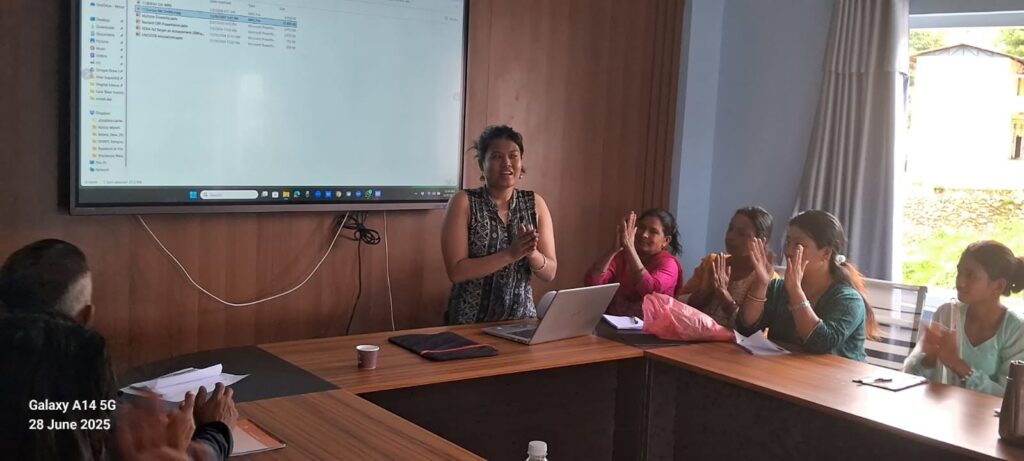
The third day featured an inspiring technical session facilitated by experts from the Autism Care Nepal Society.
The experts introduced participants to the organisation’s work in supporting adolescents and adults with autism through vocational training, life skills education, communication development, and independent living programmes.
Participants were introduced to a variety of practical learning tools commonly used to support persons with autism, including:
- Visual schedules
- Daily routine sheets
- Activity charts
- Picture-based communication
- Structured learning plans
- Behaviour support strategies
The facilitators explained that many individuals with autism learn more effectively through visual communication, structured routines, repetition, and step-by-step instruction rather than lengthy verbal explanations.
Parents learned how breaking complex activities into smaller, manageable steps can improve learning, confidence, and independence.
For many caregivers, the session was transformative. They realised that small adjustments in communication, patience, visual supports, and consistent routines can significantly improve learning and daily functioning.
Participants also discussed how every child learns differently and that recognising individual learning styles is essential for promoting independence and participation.
The session concluded with renewed hope among parents that, with appropriate support and understanding, every child with autism can develop meaningful skills, achieve greater independence, and reach their full potential.
Day Four: Understanding Multiple Disabilities and Strengthening Community Support
The final day focused on practical caregiving approaches for persons with multiple disabilities and strengthening long-term community support systems.
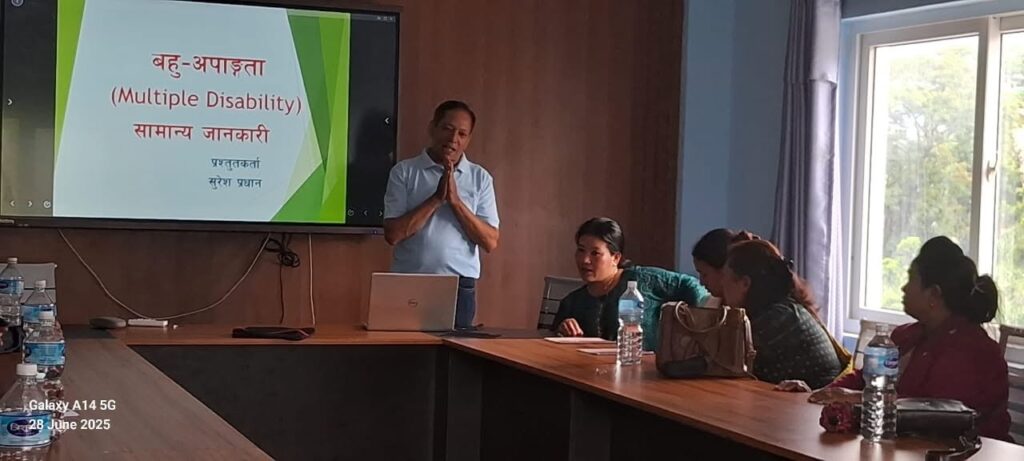
The first session was facilitated by Mr. Suresh Pradhan from the Community-Based Rehabilitation (CBR) Organisation, who discussed the importance of comprehensive assessment and personalised care for individuals with multiple disabilities.
He highlighted that persons with multiple disabilities require individualised support plans, appropriate assistive devices, rehabilitation services, and long-term planning based on their unique abilities and needs.
Drawing on practical examples, Mr. Pradhan explained how inappropriate support—even when provided with good intentions—can unintentionally reduce independence. For example, providing a wheelchair to someone who can still walk without conducting a proper assessment may limit mobility and confidence rather than enhance independence.
His session reinforced the importance of selecting appropriate assistive devices through professional assessment while respecting the abilities and preferences of persons with disabilities.
Following this session, Ms. Bhawana Majhi from Ability Manch facilitated an interactive reflection and learning session.
Parents and caregivers reflected on their experiences throughout the four-day training, sharing personal stories, challenges, and lessons learned.
Ms. Majhi encouraged participants to recognise their own strengths as caregivers while also increasing awareness of different disability types and the unique support each individual may require.
Through hands-on demonstrations and group discussions, participants practiced practical caregiving techniques that they could apply in their daily lives to promote independence, confidence, communication, and participation for persons with disabilities.
The session reinforced that effective caregiving is built upon respect, patience, understanding, and recognising the abilities—not only the challenges—of persons with disabilities.
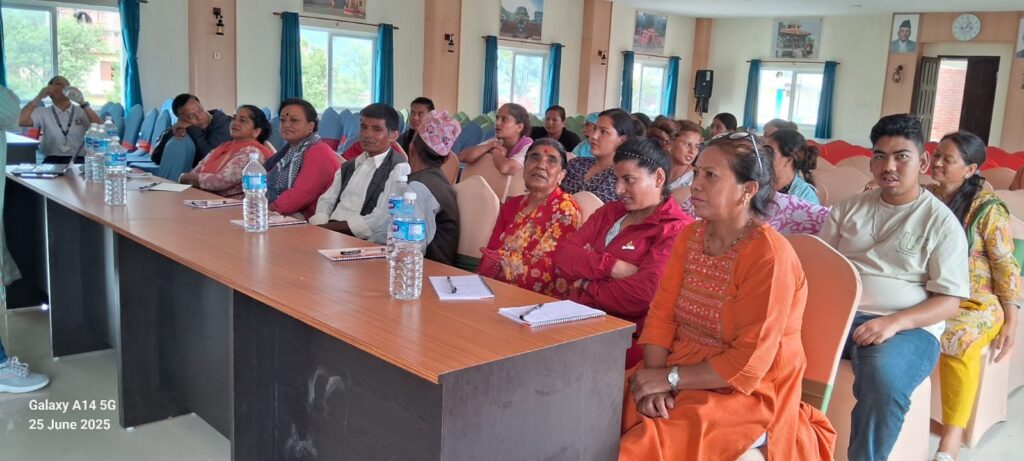
Formation of the Parents’ Committee
One of the most significant outcomes of the training was the establishment of the Parents’ Committee of Persons with Disabilities in Tarkeshwor Municipality.
The newly formed committee will serve as a platform for parents and caregivers to:
- Share experiences and peer support.
- Advocate for the rights of persons with disabilities.
- Collaborate with the municipality on disability-inclusive programmes.
- Promote community awareness and inclusion.
- Continue learning beyond the training programme.
The formation of the committee marks an important milestone in ensuring that the knowledge and relationships developed during the training continue to benefit families across the municipality.
Closing Ceremony
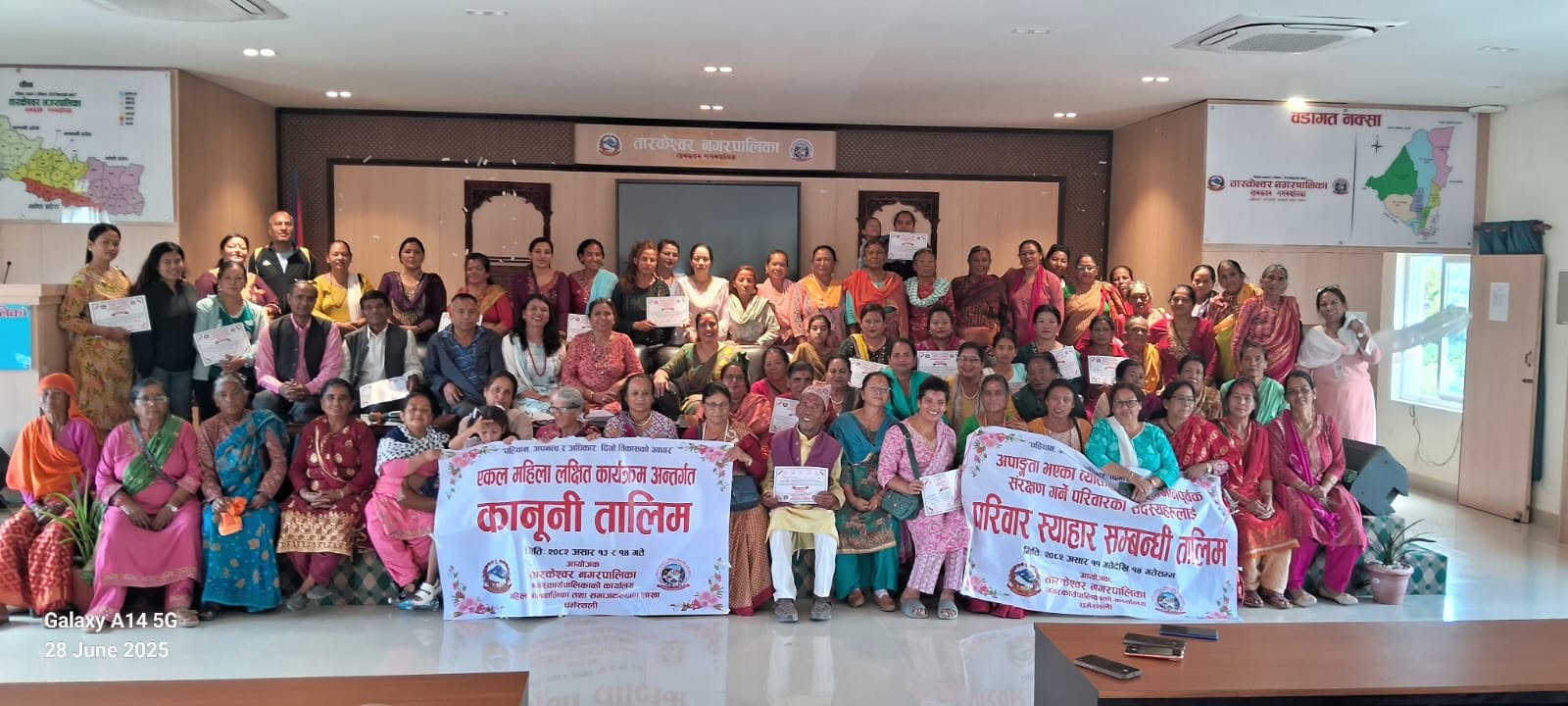
The programme concluded with a certificate distribution ceremony attended by Mrs. Srijana Burlakoti Aryal, Deputy Mayor of Tarkeshwor Municipality, whose presence reflected the municipality’s strong commitment to disability inclusion and caregiver empowerment.
The Deputy Mayor appreciated the active participation of parents, caregivers, facilitators, and partner organisations and reaffirmed the municipality’s commitment to strengthening disability-inclusive policies, services, and community support mechanisms.
Building Stronger Families and Inclusive Communities
Throughout the four-day training, participants gained practical knowledge on self-care, emotional well-being, disability awareness, autism support, multiple disabilities, communication techniques, and inclusive caregiving practices.
More importantly, the programme fostered a supportive network among parents and caregivers, creating opportunities for shared learning, collaboration, and mutual encouragement.
Ability Manch extends its sincere appreciation to the Women and Children Section of Tarkeshwor Municipality for the opportunity to provide technical support for this important initiative. The organisation remains committed to working with local governments, persons with disabilities, caregivers, and communities to promote disability rights, inclusive services, and community-based support systems.
The training concluded with a shared understanding that care begins with caring for ourselves. When caregivers are emotionally healthy, informed, and supported, they are better equipped to help persons with disabilities live with dignity, independence, and equal opportunities.
Although the training has come to an end, participants agreed that it marks the beginning of continued collaboration, stronger community networks, and collective action towards building a more inclusive and compassionate Tarkeshwor Municipality where no one is left behind.