
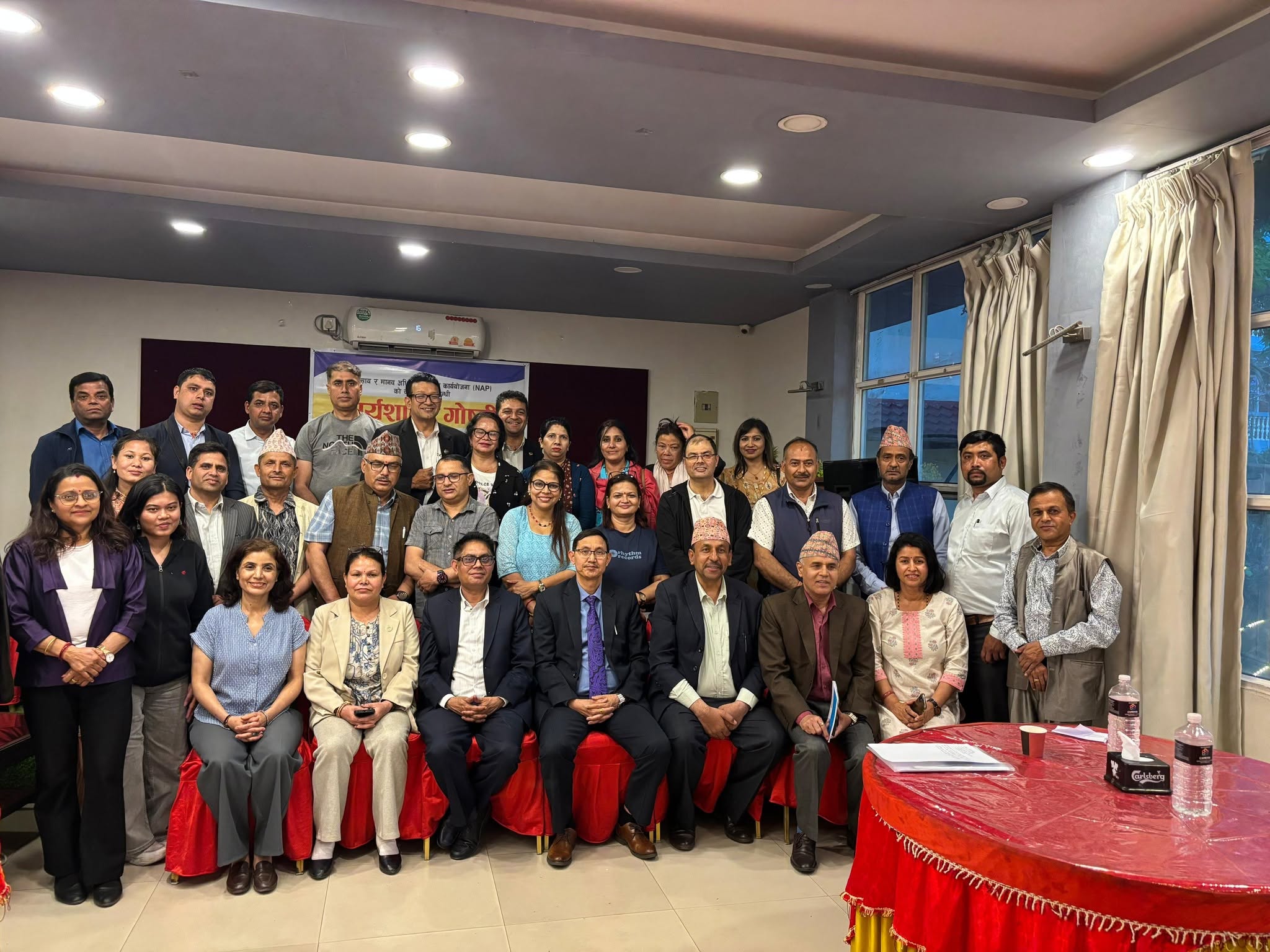
Kathmandu, Nepal – Ms. Bhawana Majhi, Advocacy and Project Development Officer at Ability Manch participated in the consultation on the National Action Plan (NAP) on Business and Human Rights (2020/21–2024/25), organised by the Forum for Protection of Consumer Rights Nepal (FPCRN) with support from the Swiss Agency for Development and Cooperation (SDC) and the United Nations Development Programme (UNDP).
The consultation brought together representatives from government agencies, civil society organisations, the private sector, consumer rights advocates, and development partners to review the implementation of Nepal’s National Action Plan and discuss strategies for strengthening responsible business practices that respect and protect human rights.
The National Action Plan on Business and Human Rights is guided by the United Nations Guiding Principles on Business and Human Rights (UNGPs), which are built on three internationally recognised pillars:
- The State Duty to Protect Human Rights
- The Corporate Responsibility to Respect Human Rights
- Access to Effective Remedy for individuals and communities affected by business-related human rights impacts
During the consultation, participants discussed the progress made under the National Action Plan while identifying persistent challenges in translating policy commitments into meaningful action.
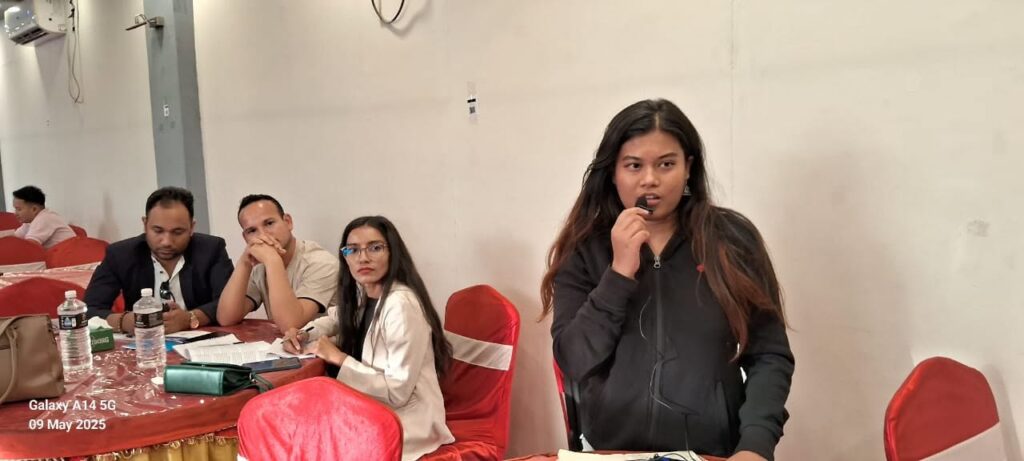
Representing the voices of persons with disabilities, Ms. Bhawana Majhi emphasised that greater efforts are needed to ensure the National Action Plan moves beyond policy commitments and results in tangible improvements for communities affected by business activities.
She stressed that socialisation of the National Action Plan, capacity strengthening, and ownership among all stakeholders are fundamental to ensuring its successful implementation. While recognising the importance of the Action Plan, she expressed concern that many policies, strategies, and justice mechanisms continue to remain largely ineffective due to weak implementation and limited institutional commitment.
Ms. Majhi highlighted that advocacy and legal frameworks alone are insufficient. Effective implementation requires technical knowledge, practical application, and continuous engagement from all actors involved.
She further noted that meaningful change can only be achieved when government institutions, civil society organisations, private sector companies, business associations, and corporate leaders internalise human rights principles and integrate them into their daily operations, organisational policies, and decision-making processes.
The consultation also highlighted the importance of moving beyond one-time awareness programmes. Participants agreed that organisations should undertake regular self-assessments, develop sector-specific implementation strategies, and systematically integrate Gender Equality, Disability, and Social Inclusion (GEDSI) into business operations and workplace practices.
Speaking from the perspective of persons with disabilities and as a member of an Indigenous and historically marginalised community, Ms. Majhi strongly advocated for disability inclusion to become a central component of Nepal’s Business and Human Rights agenda.
She emphasised that markets, workplaces, supply chains, products, and business environments must become fully accessible and inclusive for persons with disabilities. She also highlighted the need to recognise, protect, and promote traditional occupations and local enterprises practiced by Indigenous Peoples and marginalised communities, ensuring that economic development does not exclude those who have historically faced discrimination.
Ms. Majhi further recommended that disability-inclusive provisions should be explicitly incorporated throughout the National Action Plan, rather than being treated as a cross-cutting issue without concrete implementation measures. She also stressed that consumer rights must be protected equally for all citizens, including persons with disabilities.
The consultation also explored the evolving role of Corporate Social Responsibility (CSR) in advancing human rights. Participants emphasised that CSR should extend beyond charitable or symbolic activities and instead become a strategic tool for promoting inclusion, equality, accessibility, and responsible business conduct.
Ms. Majhi highlighted that CSR guidelines should be fully mainstreamed across corporate sectors and that businesses must understand their responsibility not only to generate profit but also to respect human rights through concrete improvements in organisational knowledge, attitudes, policies, and practices.
She further emphasised that businesses should not perceive human rights obligations as an additional burden. Instead, integrating human rights into business operations can strengthen consumer confidence, corporate reputation, investor trust, and long-term sustainability, while contributing to inclusive economic development.
Participants also recognised the continued importance of traditional community engagement models and emphasised that consumer rights must remain at the centre of responsible business operations.
At the conclusion of the consultation, we welcomed the National Action Plan as an important milestone in aligning Nepal’s commitments with the United Nations Guiding Principles on Business and Human Rights. However, the organization reiterated that implementation remains the greatest challenge.
The consultation concluded with a shared commitment to advancing responsible business practices that uphold human rights, accessibility, equality, disability inclusion, consumer protection, and social justice, ensuring that no one is left behind in Nepal’s economic development.